


How to Choose the Right Mobile Medical Clinic Vehicle: A Complete Buyer’s Guide
folder_openMobile Clinics
commentNo Comments
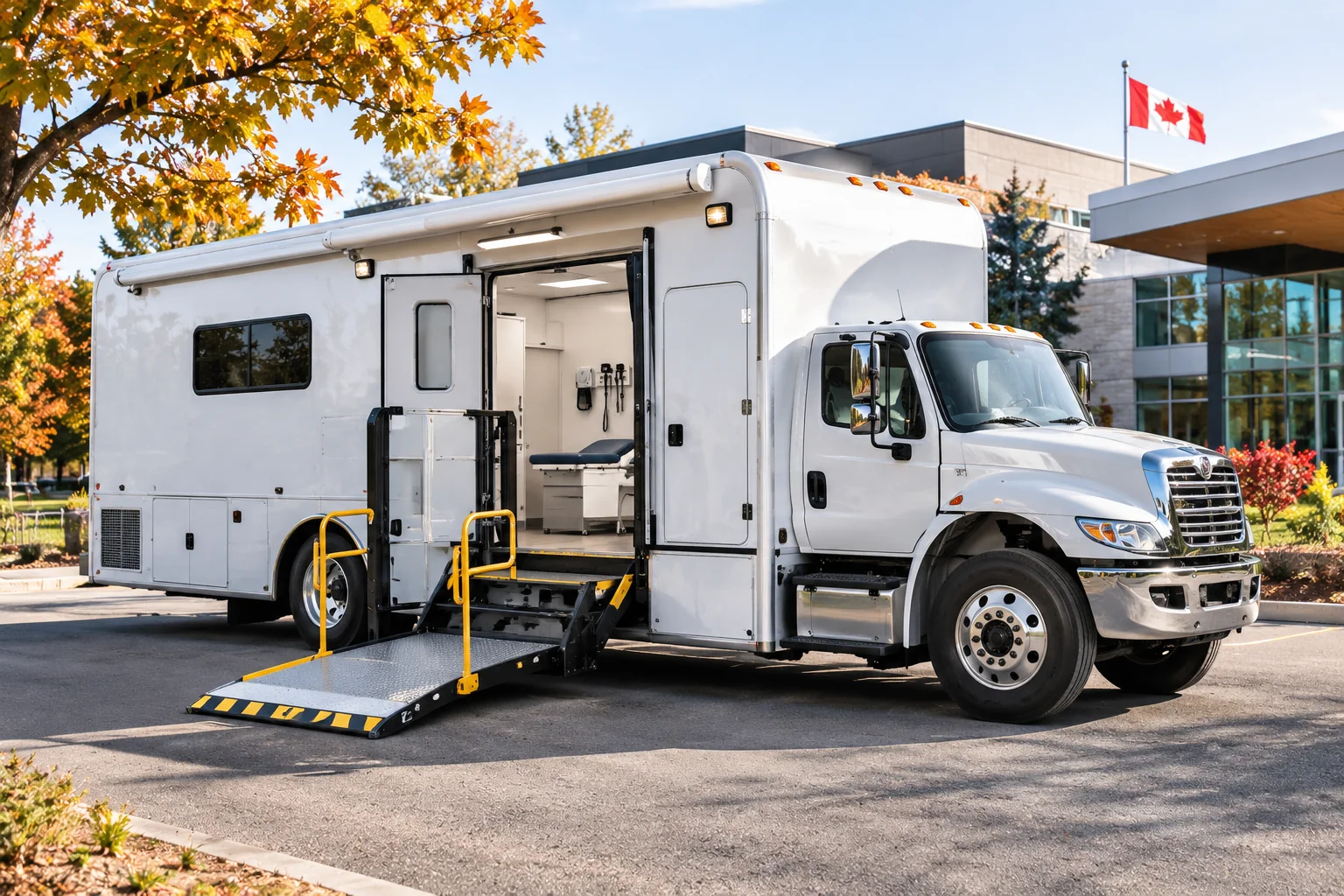
Choosing the right mobile medical clinic vehicle is a critical step in creating a successful healthcare program. From vehicle size and interior layout to medical equipment, accessibility, and operating costs, every decision affects how efficiently your clinic serves patients.
Whether you're planning a mobile primary care clinic, vaccination unit, or specialized healthcare vehicle, this comprehensive guide will help you understand the key factors to consider before investing in a custom mobile medical clinic.
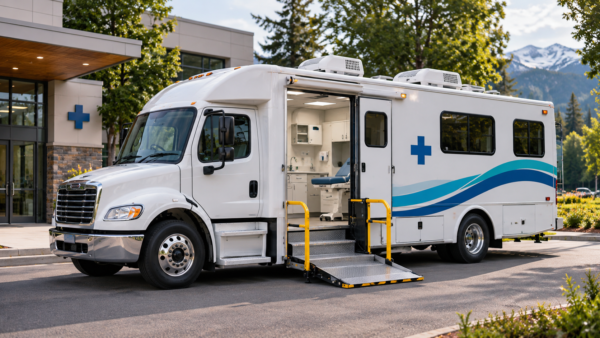
Why Choosing the Right Mobile Clinic Matters
A mobile medical clinic is more than a vehicle with medical equipment. It is a purpose-built healthcare environment that must accommodate clinical workflows, staff movement, patient needs, and the technical systems required for daily operation.
A poorly planned vehicle can create unnecessary challenges, including limited working space, inefficient patient flow, equipment access problems, and higher operating costs.
The right mobile clinic, by contrast, can help healthcare organizations reach underserved populations, deliver services in multiple locations, and adapt to changing community needs.
1. Define Your Healthcare Services and Goals
Before comparing vehicle models, identify exactly what your mobile clinic needs to accomplish.
Start by answering these questions:
- What medical services will the clinic provide?
- How many healthcare professionals will work inside?
- How many patients are expected per day?
- Will patients receive care inside the vehicle or at external stations?
- Will the clinic operate in urban areas, rural communities, or remote locations?
- Will the vehicle need to operate independently of external utilities?
For example, a mobile vaccination program may require refrigeration, organized storage, and efficient patient movement. A mobile primary care clinic may need a private examination room, handwashing facilities, diagnostic equipment, and secure medical storage.
Defining these requirements early helps avoid unnecessary features while ensuring essential systems are included.
2. Choose the Right Vehicle Type
Mobile healthcare facilities can be built using different vehicle platforms. The best choice depends on the services provided, required interior space, transportation logistics, and operating environment.
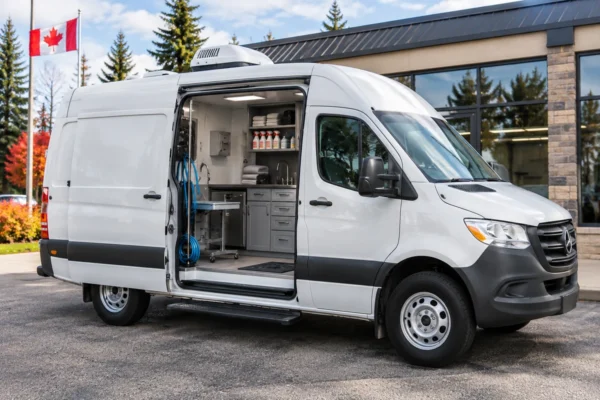
Mobile Medical Vans
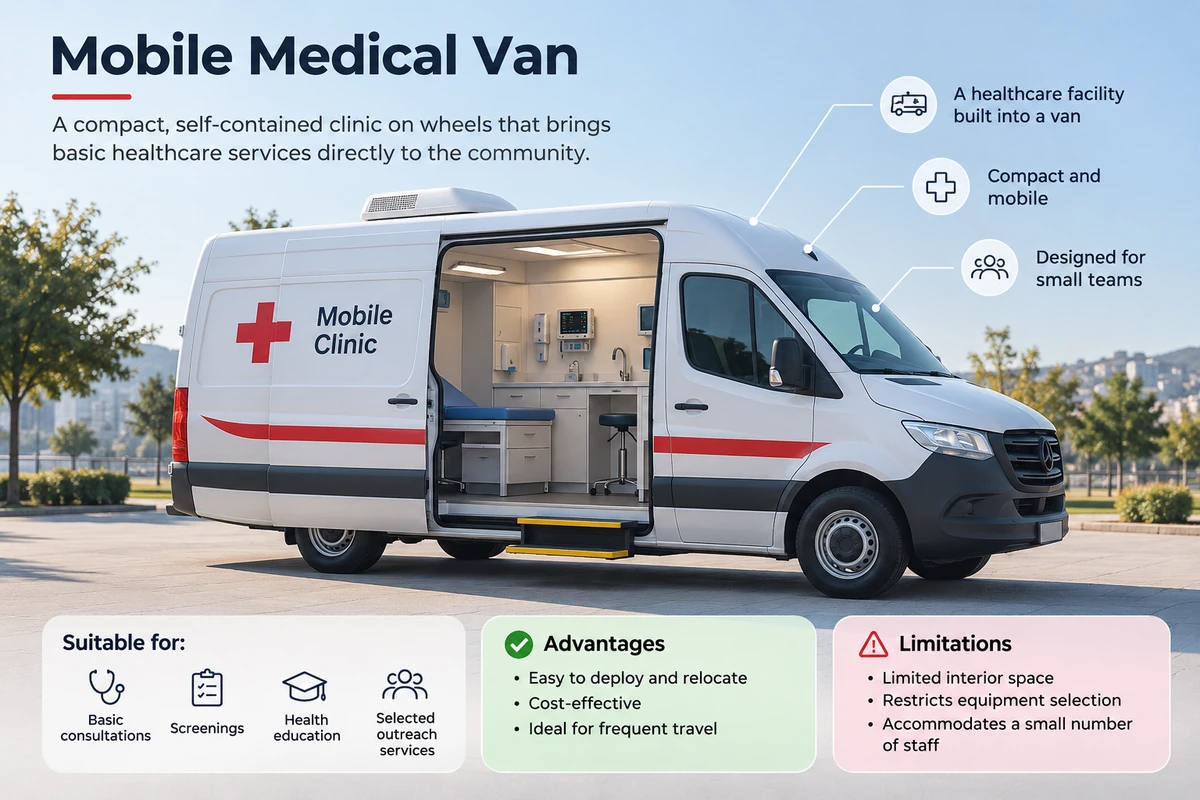
Vans are often suitable for smaller healthcare programs that require frequent travel and relatively compact clinical spaces.
They can be practical for basic consultations, screenings, health education, and selected outreach services. However, their limited interior dimensions may restrict equipment selection and staff capacity.
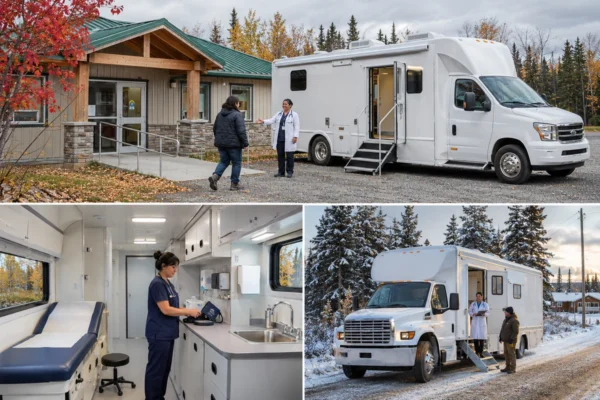
A mobile medical truck provides additional space for clinical equipment and healthcare work areas.
Mobile Medical Trucks
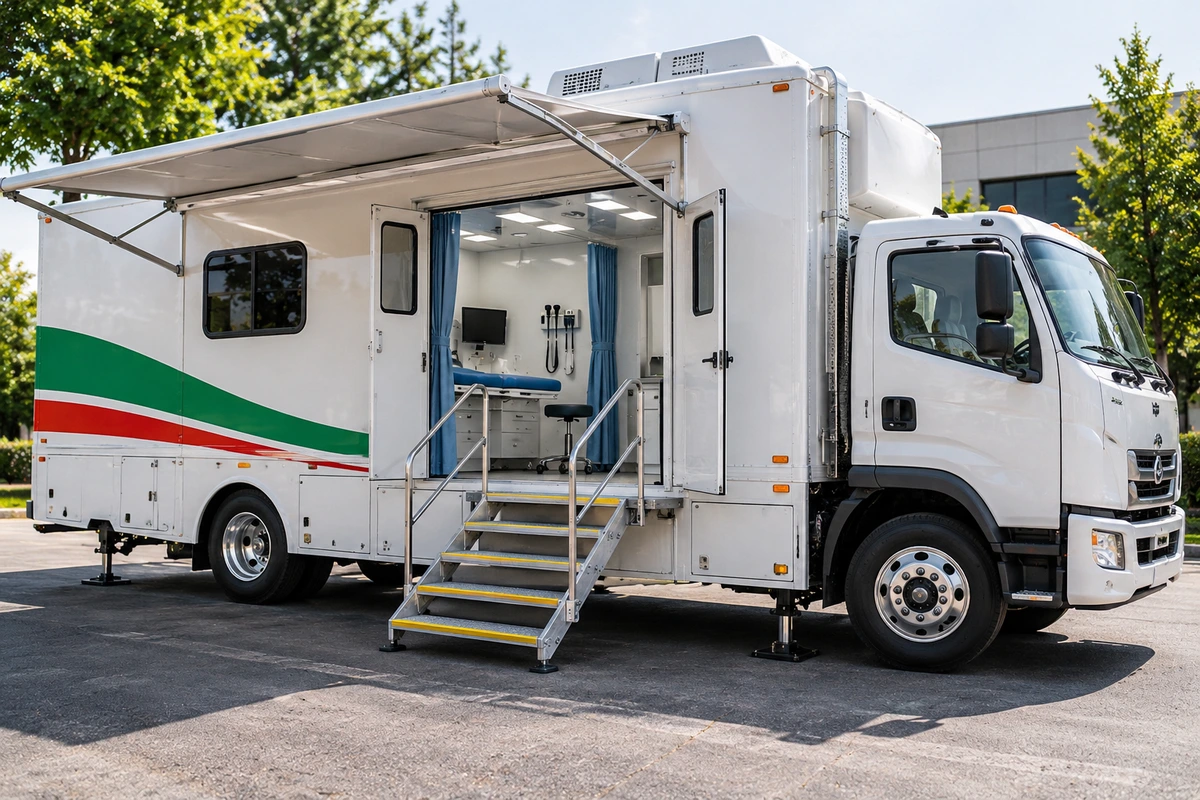
Larger trucks can accommodate more extensive clinical layouts, additional equipment, and multiple work areas.
They may be suitable for primary care, specialized diagnostics, and programs requiring more interior room. Their greater size also requires consideration of parking, maneuverability, vehicle weight, and operating costs.
Mobile Medical Trailers
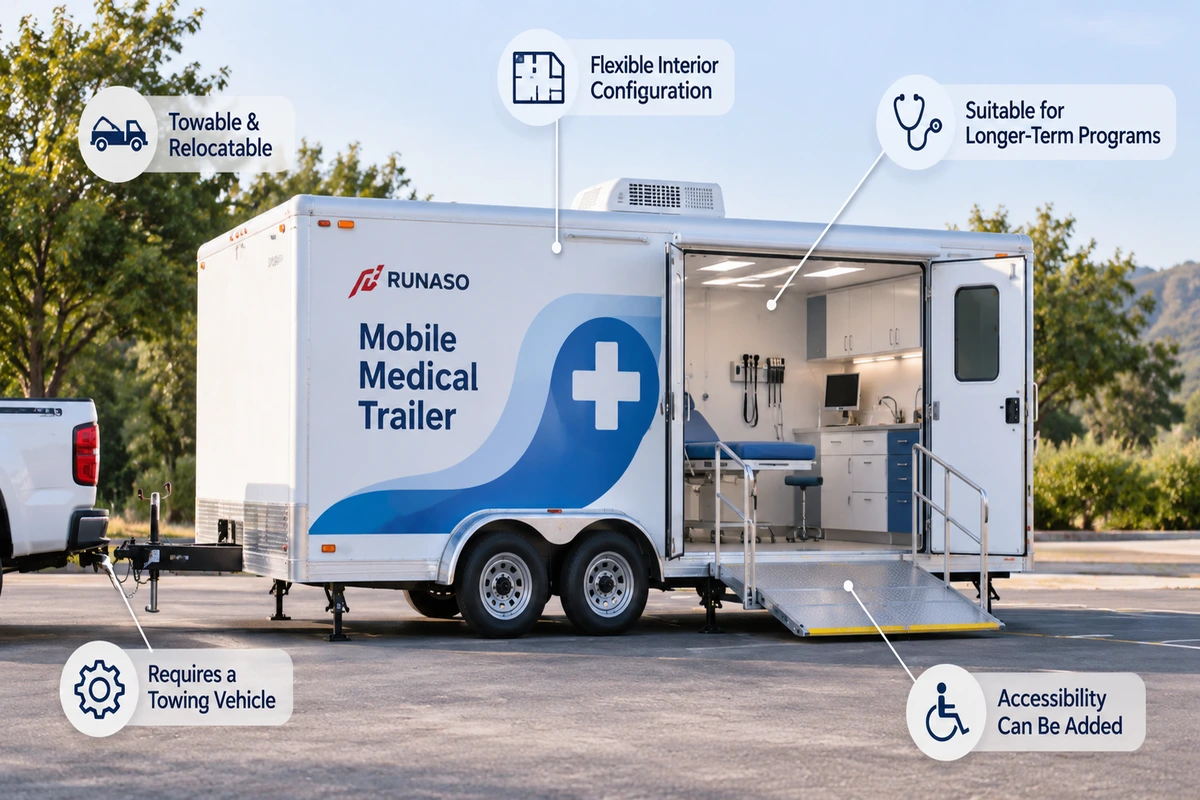
Trailers can provide flexible interior configurations and may be useful for programs that remain at one location for extended periods.
However, they require a suitable towing vehicle and appropriate setup arrangements. Accessibility, site conditions, and utility connections should be assessed carefully.
The right platform is not necessarily the largest or most expensive. It is the one that best supports the intended medical services and deployment strategy.
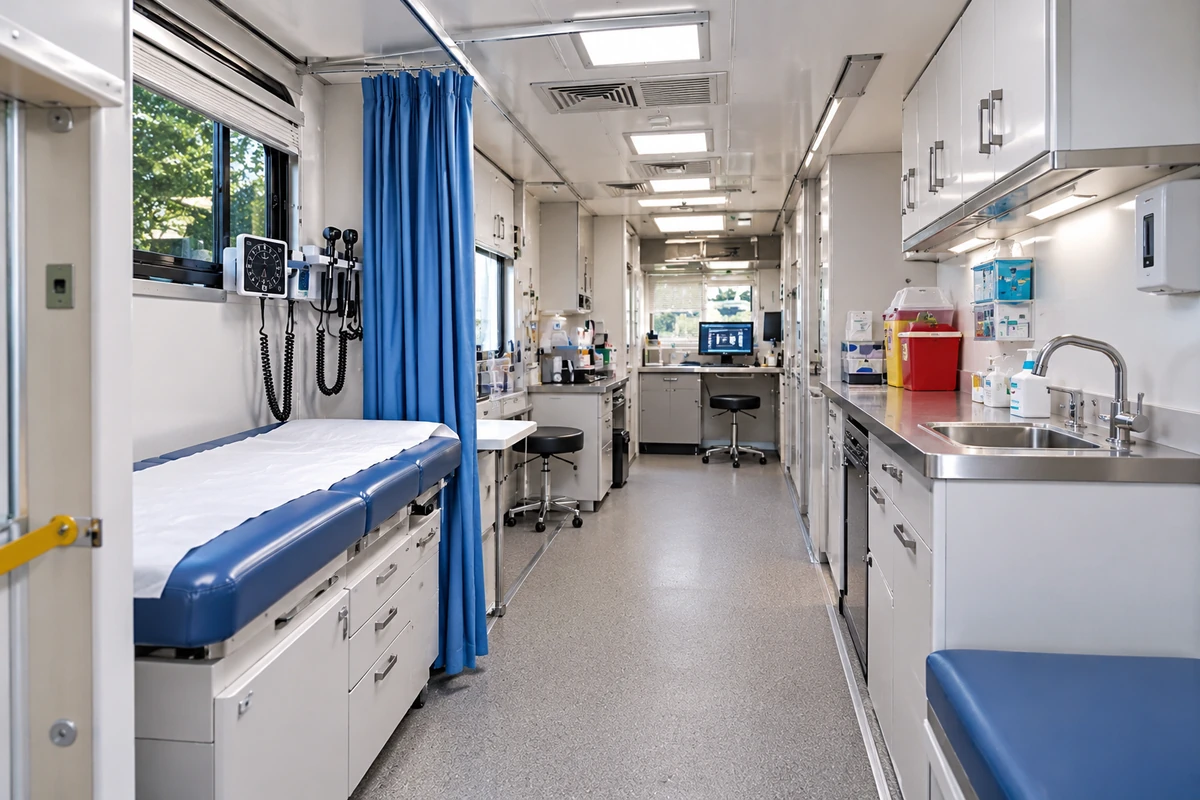
3. Plan an Efficient Interior Layout
Interior design directly affects how comfortably and efficiently healthcare professionals can work.
A well-designed mobile clinic should consider:
- Patient entry and exit routes
- Accessibility and mobility requirements
- Examination and consultation areas
- Staff movement and workflow
- Medical equipment placement
- Clean and used supply separation
- Secure storage
- Patient privacy
- Emergency access and evacuation
For example, placing frequently used supplies near examination areas can reduce unnecessary movement. Separating administrative activities from clinical spaces may also improve patient privacy.
Layouts should be evaluated with the actual medical team before manufacturing begins.
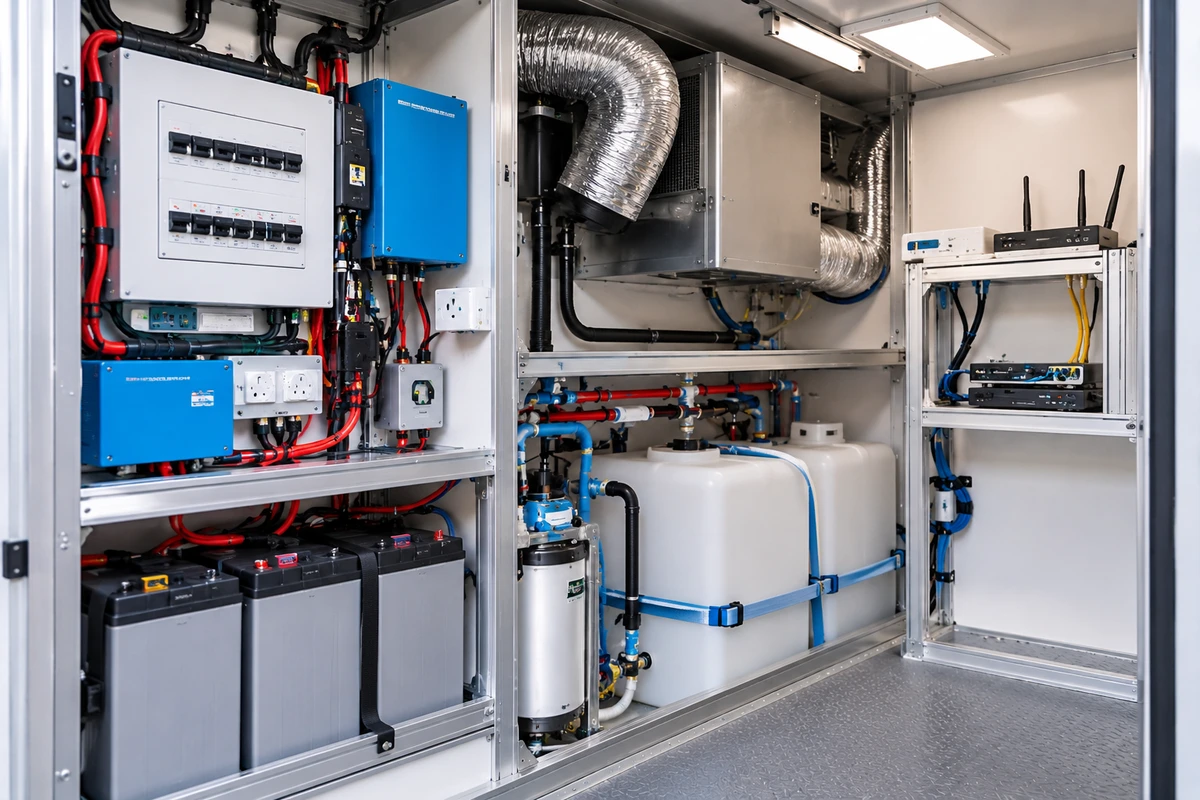
4. Evaluate Essential Technical Systems
Reliable technical infrastructure is fundamental to mobile healthcare operations.
Electrical Power
Medical devices, lighting, refrigeration, computers, and communications equipment may require different electrical loads. A suitable system could include shore power, batteries, generators, or other power sources, depending on the project.
Heating, Ventilation, and Air Conditioning
Climate control helps maintain appropriate working conditions for patients, staff, and equipment. System capacity should reflect the vehicle size, climate, occupancy, and intended medical applications.
Water and Wastewater
Where clinical procedures require sinks or washing facilities, designers must consider fresh-water storage, wastewater management, plumbing access, and cleaning requirements.
Connectivity
Internet access and secure communication systems may support electronic health records, appointment management, telemedicine, and coordination with other healthcare facilities.
All technical systems should be selected according to the actual clinical equipment and operating requirements.
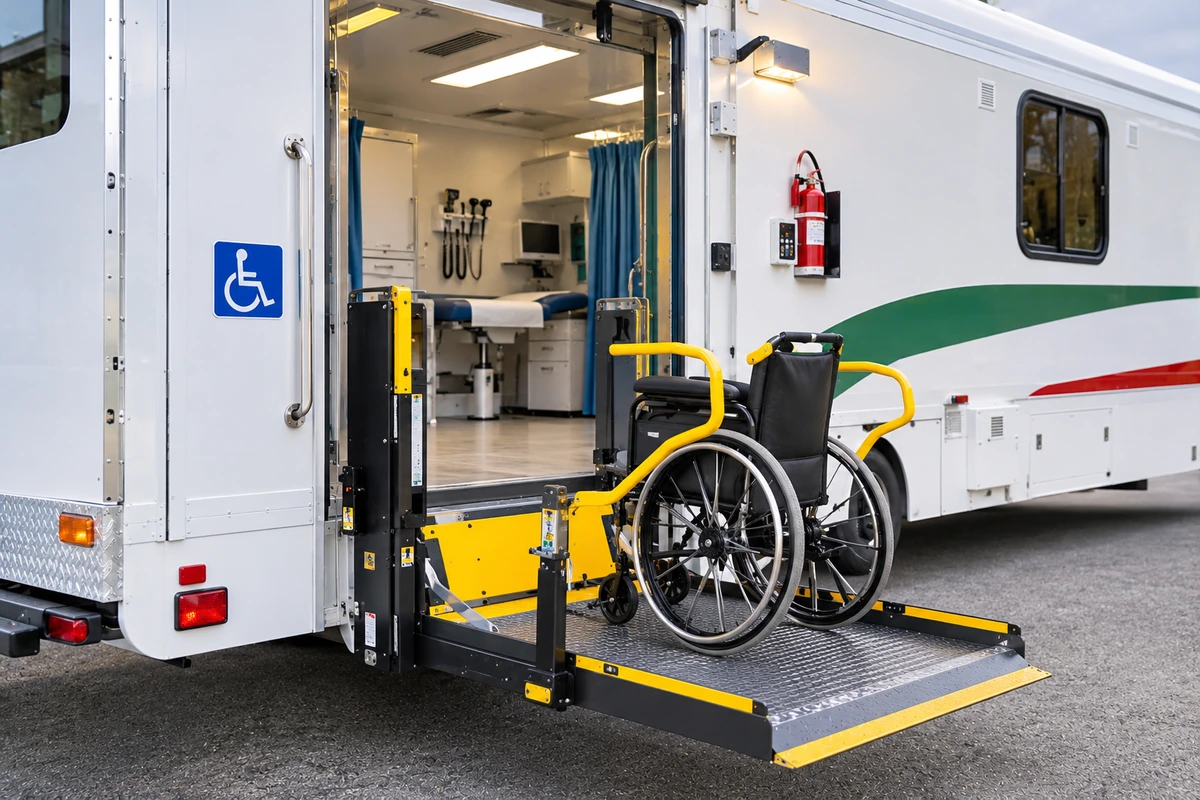
5. Prioritize Accessibility, Safety, and Compliance
A mobile medical clinic must be designed around the people who will use it.
Depending on the intended services and jurisdiction, requirements may address accessible entry, interior circulation, vehicle safety, infection prevention, fire protection, electrical installations, and medical equipment.
Accessibility features may include appropriate lifts or ramps, safe entry surfaces, and sufficient space for patients with mobility limitations.
Healthcare organizations should verify applicable vehicle, accessibility, occupational safety, and clinical regulations with qualified professionals and relevant authorities before finalizing a design.
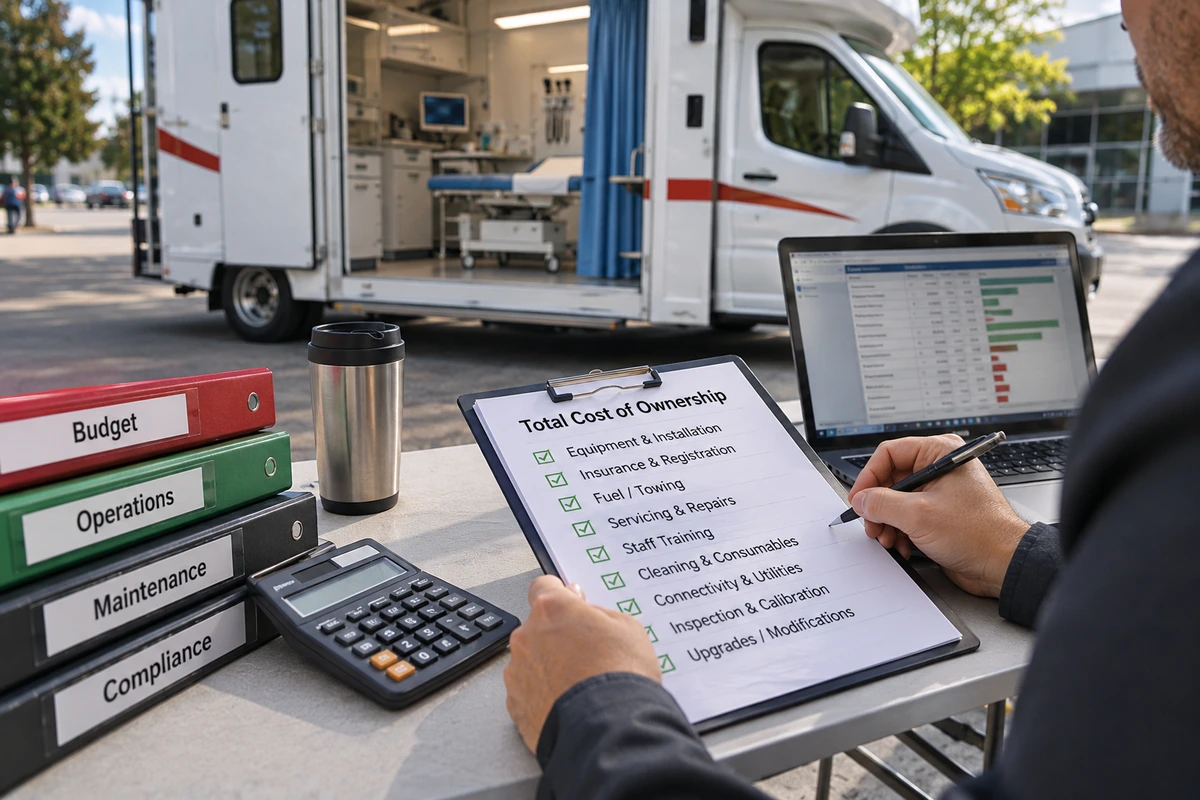
6. Consider the Total Cost of Ownership
The initial purchase price is only one part of a mobile clinic investment.
A realistic budget should also consider:
- Medical equipment and installation
- Vehicle insurance and registration
- Fuel or towing expenses
- Routine servicing and repairs
- Staff training
- Cleaning and consumables
- Connectivity and utility costs
- Equipment inspection and calibration
- Potential upgrades or modifications
A less expensive initial configuration may not always be the most economical option over several years.
Organizations should compare options based on expected usage, reliability, service requirements, and long-term operational needs.
7. Plan for Future Growth
Healthcare programs evolve. New services, additional diagnostic equipment, or expanded patient demand may change how a clinic needs to operate.
During the design stage, consider whether the vehicle can accommodate future equipment upgrades, additional storage, improved communications, or changes to the clinical workflow.
Not every mobile clinic can be expanded easily, so identifying likely future requirements before construction can reduce the need for expensive modifications.
8. Work With a Custom Specialty Vehicle Manufacturer
A custom mobile medical clinic offers the opportunity to align vehicle design with specific healthcare services rather than adapting operations to a generic layout.
RUNASO designs and manufactures specialty vehicles, including mobile healthcare solutions, to help organizations bring essential services closer to the communities they serve.
Its approach includes understanding project requirements, developing customized layouts, building the vehicle, and verifying its systems before delivery.
When discussing a potential project, provide a clear description of your services, required equipment, staffing, expected operating locations, accessibility needs, and budget.
The more clearly these requirements are defined, the easier it becomes to develop a practical vehicle concept and an accurate project quotation.
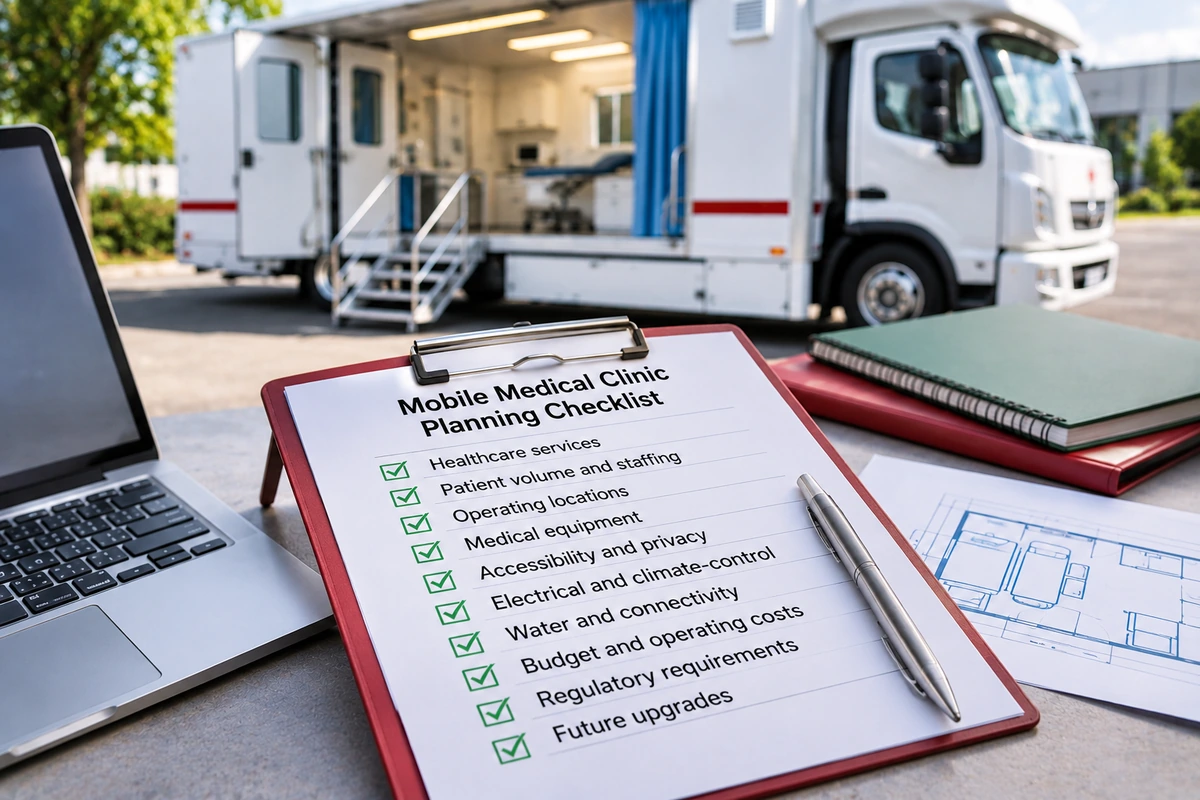 Mobile Medical Clinic Planning Checklist
Before requesting a proposal, confirm that you have identified:
- Your primary healthcare services
- Expected patient volume and staffing
- Preferred operating locations
- Required medical equipment
- Accessibility and privacy requirements
- Electrical and climate-control needs
- Water and connectivity requirements
- Budget and anticipated operating costs
- Relevant regulatory requirements
- Potential future upgrades
A detailed planning checklist helps manufacturers understand your priorities and supports more informed purchasing decisions.
The best vehicle depends on the medical services offered, required equipment, staffing, patient capacity, and operating locations. Vans may suit compact outreach programs, while larger trucks or trailers can accommodate more extensive clinical layouts.
The cost varies according to vehicle size, customization, medical equipment, accessibility features, and technical systems. A detailed quotation based on your operational requirements is the most reliable way to estimate the investment.
Yes. Mobile medical clinics can be designed with customized examination areas, storage, electrical systems, climate control, accessibility features, and equipment configurations to support specific healthcare services.
Equipment requirements depend on the services provided. Common considerations include examination furniture, diagnostic devices, medical storage, handwashing facilities, refrigeration where necessary, and reliable electrical and communication systems.
Requirements vary by jurisdiction and clinical use. Organizations should verify applicable vehicle registration, accessibility, healthcare licensing, safety, and equipment requirements before operating a mobile clinic.
The timeline depends on the vehicle platform, design complexity, equipment availability, customization, and required inspections. A specialty vehicle manufacturer can provide a project-specific schedule after reviewing the requirements.
Choosing the right mobile medical clinic begins with understanding your healthcare goals, operational requirements, and the communities you intend to serve.
From selecting the appropriate vehicle platform to planning clinical layouts, technical systems, accessibility, and long-term maintenance, every decision contributes to the success of your mobile healthcare program.
At RUNASO, we help organizations turn their mobile service concepts into purpose-built specialty vehicles. Whether you are planning a primary care clinic, a community health unit, or a specialized medical vehicle, our team can help you explore a solution tailored to your needs.
Ready to take the next step? Contact RUNASO to discuss your project and request a customized quote.
Related Products

Mobile Marketing Vehicles

Mobile Library Vehicles

Mobile Schools

Mobile Veterinary Vehicles

Mobile Food Vehicles

Mobile Spa Vehicles

Mobile Lab Vehicles

Mobile Imaging Vehicles

Commercial Educational Vehicles




Tags: Custom Medical Vehicles, Medical Vehicle Selection, Mobile Clinic Buying Guide, Mobile Clinic Design, Mobile Healthcare Solutions, Mobile Healthcare Vehicles, Mobile Medical Clinic Vehicle