


Emergency Response Vehicles in Canada: Types, Features, and Applications
folder_openEmergency & Rescue Vehicles
commentNo Comments
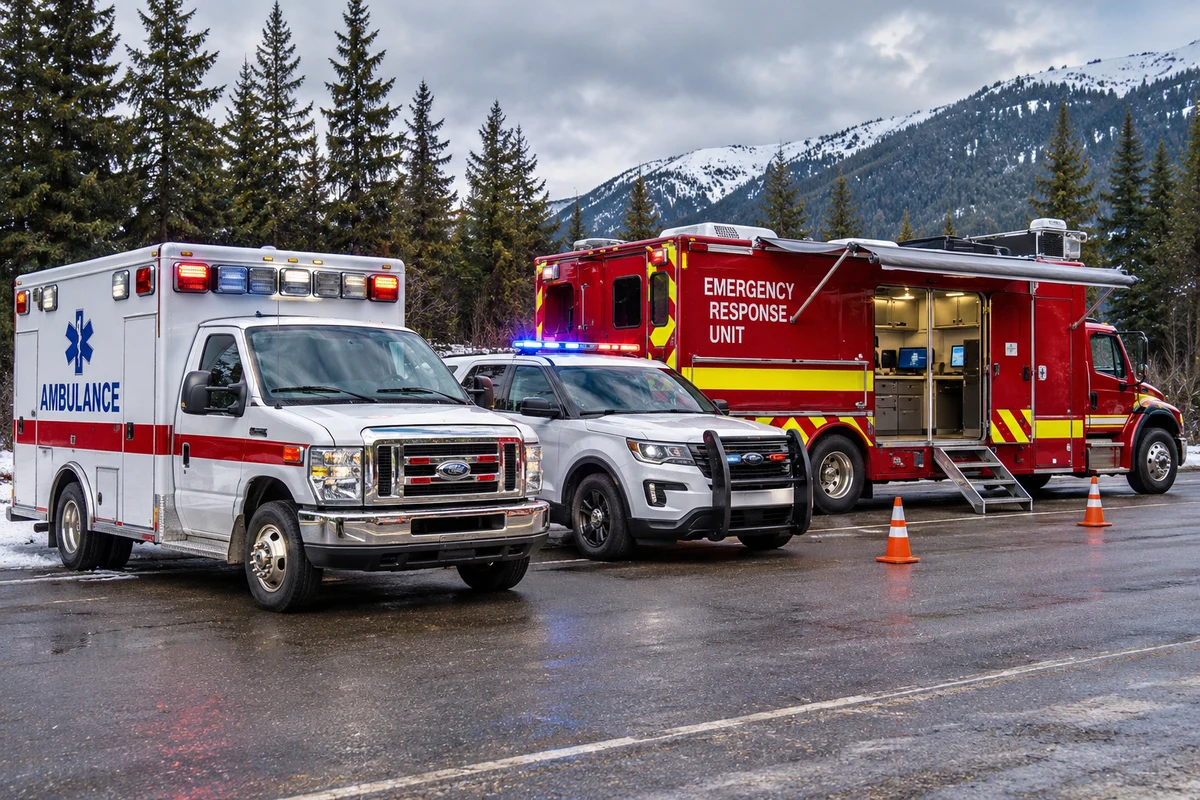
Emergency response vehicles are essential to public safety, helping first responders, emergency management agencies, and specialized teams operate effectively when time, coordination, and reliability matter most. From mobile command centres and fire rescue units to medical response and disaster support vehicles, each configuration serves a distinct operational purpose.
In Canada, selecting the right emergency response vehicle requires more than choosing a suitable chassis or installing specialized equipment. Organizations must consider demanding weather conditions, regional operating environments, communication requirements, crew safety, regulatory compliance, and long-term maintenance.
This guide explores the major types of emergency response vehicles, their essential features, common applications, and the practical factors organizations should evaluate before investing in a purpose-built fleet vehicle. Although the discussion emphasizes Canadian operating conditions, the principles also apply to emergency response organizations internationally.
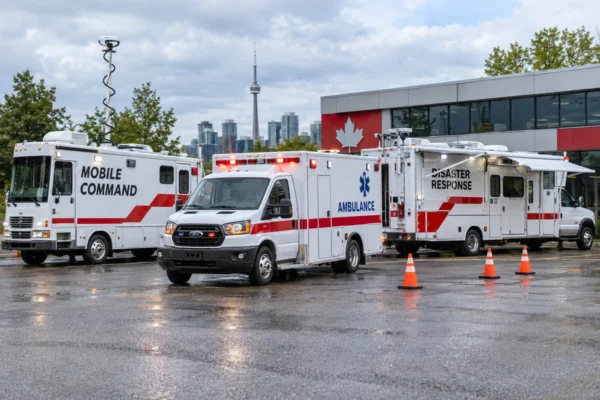
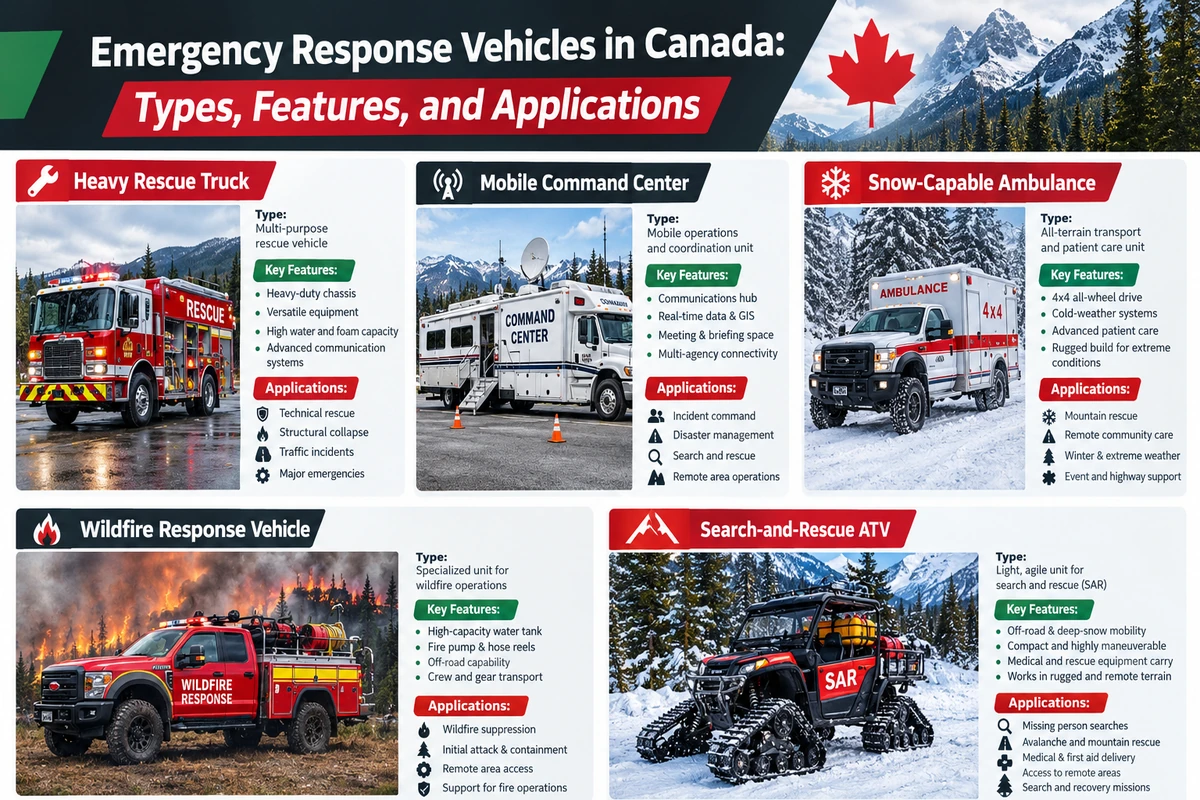
Five emergency response vehicle categories and their common uses.Five emergency response vehicle categories and their common uses.Emergency response vehicles are purpose-built or specially converted vehicles that support public safety, emergency medical care, rescue operations, incident management, and disaster response. Unlike standard commercial vehicles, they are configured around specific operational requirements, including personnel protection, equipment access, communications, power supply, and deployment readiness.
Emergency response fleets may include ambulances, fire apparatus, rapid response SUVs, mobile command centres, communications vehicles, and specialized rescue units. Some vehicles are designed to transport patients or personnel, while others function as mobile workstations, equipment carriers, or coordination centres.
The most suitable configuration depends on the organization’s responsibilities, the hazards it encounters, and the environments in which it operates. A vehicle intended for urban emergency medical response has substantially different requirements from one supporting wildfire operations, remote search and rescue, or a multi-agency disaster response.
Major Types of Emergency Response Vehicles
1. Ambulances and Emergency Medical Response Vehicles
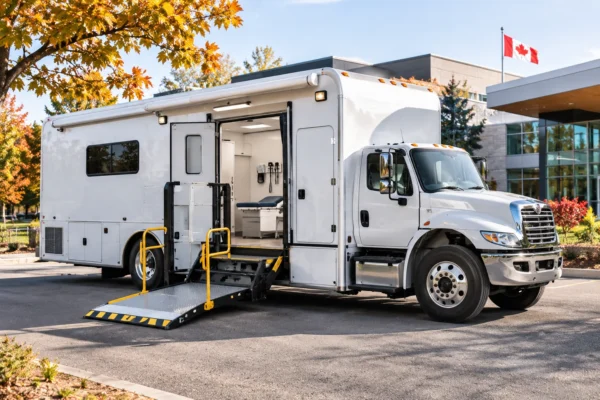
Ambulances provide mobile patient assessment, treatment, monitoring, and transportation. Their interiors are designed around safe patient handling, access to medical supplies, infection prevention, and the operational needs of paramedics.
Common equipment and design considerations include:
- Approved patient stretchers and restraint systems.
- Secure storage for medical equipment and supplies.
- Appropriate oxygen and medical gas installations.
- Patient compartment heating, cooling, and ventilation.
- Emergency lighting, communication systems, and scene illumination.
- Cleanable surfaces and practical infection-control features.
Not every medical response vehicle is an ambulance. Rapid response SUVs and other non-transport units may deliver personnel and equipment to an incident without carrying patients. Their legal classification, permitted equipment, and operating requirements depend on the jurisdiction.
2. Fire Rescue Vehicles
Fire rescue vehicles support firefighting, technical rescue, vehicle extrication, and other emergency operations. Depending on their mission, they may carry pumps, water tanks, hose systems, breathing apparatus, hydraulic rescue tools, and specialized equipment.
Rescue-focused vehicles may prioritize organized tool storage and crew access rather than large water-carrying capacity.
Typical applications include structural fires, traffic collisions, industrial emergencies, and technical rescue incidents.
Organizations evaluating a specialized configuration can explore RUNASO’s emergency response vehicle range, which includes fire rescue and other purpose-built vehicle categories.
3. Mobile Command Vehicles
Mobile command vehicles provide a dedicated workspace for incident commanders and coordination teams. They are particularly valuable during emergencies involving multiple organizations, extended operational periods, or complex information management.
A properly configured mobile command centre may include:
- Workstations for incident management personnel.
- Radio and data communication equipment.
- Displays for mapping, incident information, and resource tracking.
- Meeting or briefing space.
- Independent or supplemental electrical power.
- Climate control and secure equipment storage.
These vehicles can support wildfire response, major transportation incidents, search-and-rescue coordination, public events, and emergency management operations.
Learn more about the role of mobile command and communications vehicles in specialized emergency fleets.
4. Mobile Communication Vehicles
Mobile communication vehicles provide transportable communications infrastructure when fixed networks are unavailable, overloaded, or insufficient for the response.
Depending on the project, equipment may include land-mobile radio systems, cellular connectivity, satellite terminals, network hardware, antennas, and backup power.
Effective design requires more than installing multiple communication devices. Agencies must assess radio interoperability, antenna placement, network security, power demand, equipment cooling, and the reliability of available communication paths.
These vehicles are particularly useful during natural disasters, infrastructure outages, remote deployments, and multi-agency incidents.
5. Search-and-Rescue Vehicles
Search-and-rescue vehicles transport responders and specialized equipment to locations where people may be missing, injured, or stranded.
Depending on the operating environment, these units may be based on pickup trucks, vans, larger equipment carriers, or suitable off-highway platforms.
Common equipment includes:
- Rescue ropes, harnesses, and technical rescue equipment.
- Portable medical and patient evacuation supplies.
- Navigation and communications systems.
- Search lighting and scene illumination.
- Weather-protected storage for clothing and rescue equipment.
- Recovery equipment appropriate to the vehicle and terrain.
In Canada, remote access, snow, mud, steep terrain, and long travel distances may influence vehicle selection. Four-wheel drive can be useful, but it does not replace appropriate tyres, route planning, recovery capability, or operator training.
6. Crisis and Disaster Response Vehicles
Crisis response vehicles support organizations responding to floods, severe storms, wildfires, evacuations, infrastructure failures, and other major emergencies.
These vehicles may be configured as mobile coordination centres, equipment distribution units, temporary support facilities, or field workspaces.
Their equipment depends on the mission. Possible features include auxiliary power, environmental monitoring, communications systems, workstations, weather protection, and organized storage for emergency supplies.
RUNASO’s Crisis Response Vehicles illustrate the configurable nature of this category.
7. Specialized Law Enforcement and Hazard Response Vehicles
Some emergency operations require vehicles designed for specialized public safety tasks.
Examples include mobile crime laboratories, hazardous-materials response units, explosive ordnance disposal support vehicles, and tactical deployment vehicles.
These units may require secure storage, controlled access, specialist equipment mounting, evidence-handling workspaces, or dedicated communications.
Vehicle design should follow the operational procedures and safety requirements of the responsible agency. Protective systems and specialized installations must be evaluated against documented requirements rather than assumed to provide a particular level of protection.
Essential Features of a Reliable Emergency Response Vehicle
Vehicle Platform and Payload Capacity
The chassis must safely support the completed vehicle, including installed equipment, personnel, fuel, supplies, and anticipated operational loads.
Before selecting a platform, organizations should evaluate:
- Gross vehicle weight rating and axle weight ratings.
- Available payload after conversion.
- Vehicle dimensions and access restrictions.
- Braking performance and suspension suitability.
- Expected operating terrain and annual mileage.
- Availability of maintenance and replacement parts.
Equipment placement also matters. Concentrating heavy equipment in one compartment can create undesirable axle loading even when the vehicle remains within its overall weight rating.
Emergency Lighting and Visibility
Emergency warning lights, scene lighting, reflective markings, and audible warning systems help make response vehicles visible and support safe operations.
Lighting configuration must be matched to the vehicle’s authorized role and applicable provincial or territorial rules. Installing a light bar does not automatically give a vehicle emergency status or special road privileges.
Communications and Connectivity
Reliable communication is essential for coordinating personnel, requesting resources, and maintaining situational awareness.
Organizations should consider the radio networks used by partner agencies, available cellular coverage, satellite connectivity where necessary, secure data access, and the consequences of losing a primary communication channel.
Redundant systems are useful when they address realistic failure scenarios. Every additional system also introduces maintenance, training, and cybersecurity responsibilities.
Electrical Power and Energy Management
Emergency response vehicles may need to power radios, computers, medical equipment, lighting, ventilation, and specialized tools while parked.
Electrical design should account for simultaneous loads, peak demand, battery capacity, charging capability, environmental conditions, and required operating duration.
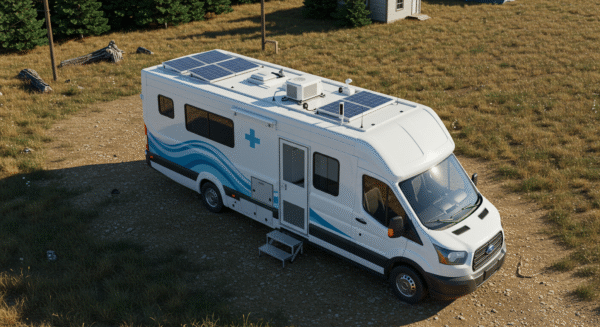
Potential solutions include auxiliary batteries, engine-driven charging, shore power, inverters, and appropriately installed generators.
Critical equipment should be assigned clear power priorities, and essential systems should have suitable protection and backup arrangements.
Interior Ergonomics and Equipment Storage
Responders often work under time pressure while wearing protective clothing or operating in poor weather.
Equipment should be arranged to minimize unnecessary movement and allow rapid access to frequently used supplies.
Secure mounting, suitable seating restraints, safe entry and exit, non-slip surfaces, and adequate lighting are important design considerations.
Storage solutions must also prevent equipment from becoming a hazard during sudden braking or a collision.
Emergency Response Vehicle Comparison
| Vehicle Type | Primary Purpose | Typical Equipment | Common Applications |
|---|---|---|---|
| Ambulance | Emergency patient care and transport | Stretcher, medical equipment, patient monitoring | Medical emergencies and patient transport |
| Fire Rescue Vehicle | Fire suppression and rescue support | Firefighting and rescue tools | Fires, collisions, technical rescue |
| Mobile Command Vehicle | Incident management | Workstations, displays, communications | Major incidents and multi-agency operations |
| Communication Vehicle | Field connectivity | Radios, network equipment, antennas | Remote response and communications outages |
| Search-and-Rescue Vehicle | Rescue team and equipment deployment | Rescue equipment, navigation, medical supplies | Wilderness and remote-area rescue |
| Crisis Response Vehicle | Emergency support and coordination | Power, supplies, workspaces, communications | Floods, storms, evacuations, disaster relief |
Designing Emergency Response Vehicles for Canadian Conditions
Cold Weather and Winter Reliability
Cold temperatures can affect battery performance, engine starting, fluid systems, seals, and electronic equipment.
Vehicle specifications should consider the lowest temperatures reasonably expected during deployment, including periods when the vehicle is parked without engine power.
Potential design measures include suitable insulation, effective heating, protected plumbing where installed, cold-rated components, and an appropriate battery management strategy.
Winter tyres, traction equipment, and maintenance procedures should be selected according to the operating environment and applicable requirements.
Remote and Rural Operations
Emergency vehicles operating outside major urban centres may face longer travel distances, limited service infrastructure, weak cellular coverage, and restricted access to fuel or charging facilities.
These conditions influence fuel capacity, vehicle range, communications redundancy, onboard power, spare equipment, and serviceability.
A large vehicle with extensive equipment is not necessarily the best choice for remote response if its size, weight, or turning radius limits access.
Wildfires, Flooding, and Severe Weather
Different hazards create different equipment priorities.
Wildfire support may require filtration considerations, communications equipment, protective storage, and reliable operation in dusty environments. Flood response may emphasize water-resistant equipment compartments, portable pumps, lighting, and safe equipment deployment.
Vehicle design should not imply that a standard road vehicle is safe to drive through floodwater, active fire zones, or other hazardous environments without appropriate operational controls.
Canadian Regulations and Compliance Considerations
Emergency vehicle compliance in Canada involves federal vehicle safety requirements and additional provincial, territorial, and operational rules.
Federal Motor Vehicle Safety Requirements
Transport Canada explains that vehicles manufactured for sale in Canada or imported into Canada must meet applicable Canada Motor Vehicle Safety Standards (CMVSS).
The federal Motor Vehicle Safety Regulations also address companies that modify or add equipment to create specialty vehicles, including ambulances and fire trucks.
Organizations should establish the applicable vehicle classification, manufacturing or conversion obligations, and required compliance documentation before commissioning a conversion.
Reference: Transport Canada – Safety Standards for Vehicles.
Provincial and Territorial Requirements
Vehicle recognition, emergency warning lights, operating privileges, inspection requirements, and driver qualifications can differ between jurisdictions.
For example, Ontario maintains a Provincial Land Ambulance and Emergency Response Vehicle Standard for vehicles within its applicable ambulance regulatory framework. The province also maintains certification information for ambulance conversion manufacturers and models.
Reference: Ontario Ministry of Health – Paramedic Practice Documents.
Other provinces and territories have their own applicable legislation and requirements. Organizations should verify the rules for the jurisdiction where a vehicle will be registered and operated.
Equipment and Operational Compliance
Vehicle approval does not automatically establish that every installed device, communication system, or medical component is suitable for its intended use.
Depending on the application, additional considerations may include equipment certification, installation standards, medical device requirements, operator training, secure equipment mounting, and maintenance records.
Purchasers should obtain written documentation showing which standards and requirements the completed vehicle is intended to satisfy.
How to Choose the Right Emergency Response Vehicle
Vehicle procurement should begin with a clear operational requirements document rather than a list of attractive features.
Step 1: Define the Mission
Identify the incidents the vehicle must support, the personnel who will use it, and the equipment required to complete those tasks.
Distinguish essential capabilities from optional features. This helps prevent unnecessary complexity and protects the available payload and budget.
Step 2: Assess the Operating Environment
Document expected travel distances, weather exposure, road conditions, parking restrictions, site access, and deployment duration.
Consider whether the vehicle must operate independently or will usually have access to external power, communications, and logistical support.
Step 3: Develop an Equipment and Power Schedule
List every major installed component with its approximate weight, dimensions, power requirements, and maintenance needs.
Confirm that the selected chassis can accommodate the completed configuration without exceeding applicable weight limits.
Step 4: Verify Compliance Before Construction
Identify the federal and local requirements applicable to the vehicle, including any relevant certification or inspection obligations.
Discuss these requirements with qualified conversion specialists and the appropriate regulatory authorities before finalizing the design.
Step 5: Evaluate Lifecycle Cost
Purchase price is only one component of vehicle ownership.
Organizations should also evaluate fuel or energy consumption, scheduled maintenance, equipment calibration, replacement parts, operator training, warranty coverage, and expected service life.
Step 6: Plan Acceptance Testing and Training
Before accepting delivery, verify that the completed vehicle matches the approved specifications.
Testing should cover equipment installation, electrical operation, communications, climate control, storage access, safety systems, and operational readiness.
Personnel should receive practical training on installed systems, emergency shutdown procedures, and routine inspections.
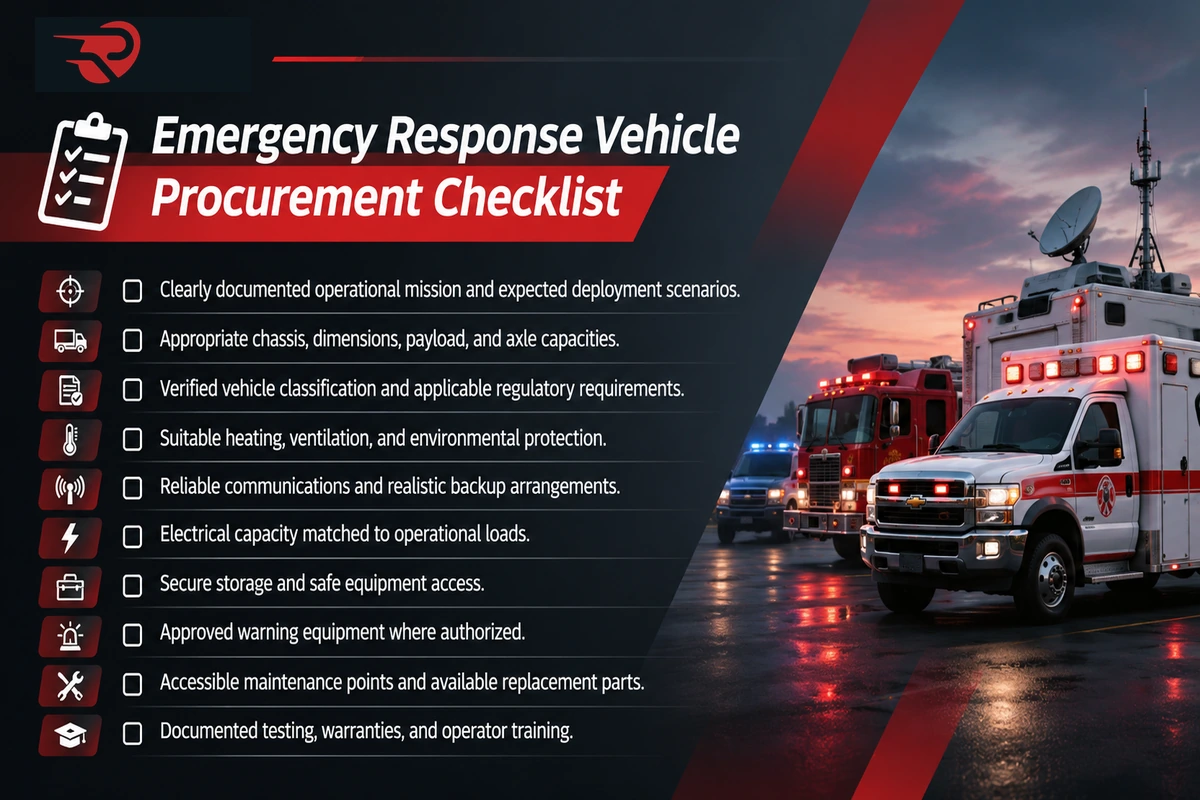
Emergency Response Vehicle Procurement Checklist
- ☐ Clearly documented operational mission and expected deployment scenarios.
- ☐ Appropriate chassis, dimensions, payload, and axle capacities.
- ☐ Verified vehicle classification and applicable regulatory requirements.
- ☐ Suitable heating, ventilation, and environmental protection.
- ☐ Reliable communications and realistic backup arrangements.
- ☐ Electrical capacity matched to operational loads.
- ☐ Secure storage and safe equipment access.
- ☐ Approved warning equipment where authorized.
- ☐ Accessible maintenance points and available replacement parts.
- ☐ Documented testing, warranties, and operator training.
Maintenance and Long-Term Operational Readiness
Emergency response vehicles may spend long periods parked before being required to operate immediately. This makes preventive maintenance and readiness checks particularly important.
A practical maintenance program should address both the vehicle chassis and the specialized conversion equipment.
Routine Readiness Checks
- Inspect tyres, fluid levels, brakes, and visible leaks.
- Check starting batteries and auxiliary power systems.
- Test authorized emergency lighting and scene lighting.
- Verify radio and data communications.
- Confirm equipment is present, secured, and serviceable.
- Inspect heating, ventilation, and cooling systems.
- Check access doors, steps, compartment latches, and seals.
- Review any equipment-specific calibration or inspection schedules.
Maintenance intervals should follow manufacturer instructions, regulatory obligations, and the organization’s actual duty cycle.
Documenting inspections, defects, repairs, and equipment changes helps agencies manage reliability and identify recurring problems.
Future Developments in Emergency Response Vehicles
Emergency vehicle technology continues to evolve as organizations seek better information sharing, safer working environments, and more efficient fleet operations.
Developments worth evaluating include integrated vehicle monitoring, improved communications interoperability, remote equipment diagnostics, advanced power management, and more efficient auxiliary electrical systems.
Hybrid and electric platforms may be suitable for some response applications, but their practicality depends on operating range, charging access, payload, climate, deployment duration, and backup power requirements.
New technology should be evaluated through operational testing and lifecycle analysis rather than adopted solely because it is available.
Working With a Specialty Vehicle Manufacturer
Designing an emergency response vehicle requires coordination between operational personnel, fleet managers, technical specialists, and vehicle conversion professionals.
A qualified manufacturer should be able to discuss chassis selection, equipment integration, power requirements, service access, regulatory documentation, and acceptance testing.
Organizations considering a purpose-built vehicle can review RUNASO’s Emergency Response Vehicles to explore available customization concepts and begin defining their technical requirements.
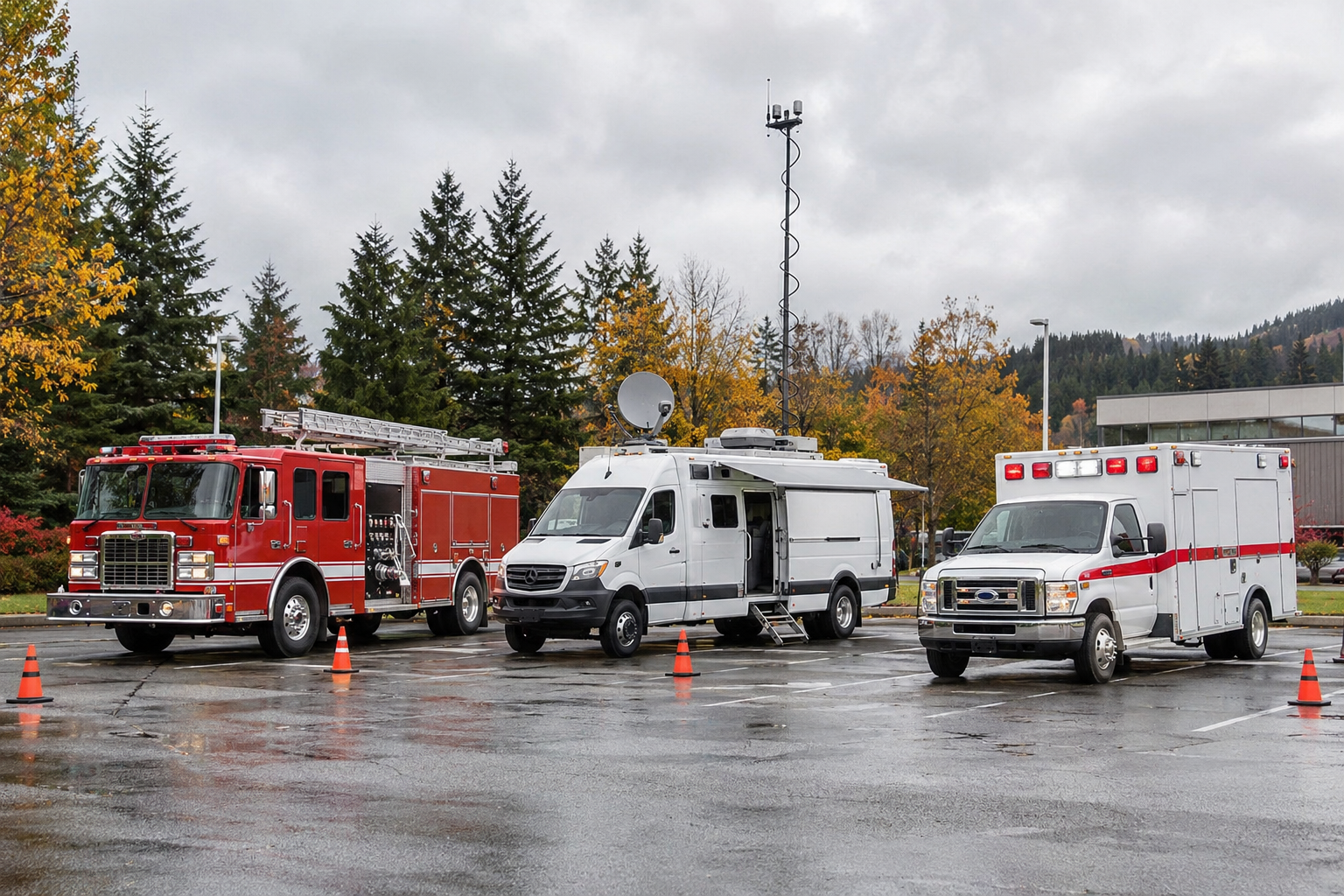
Emergency response vehicles include ambulances, fire rescue vehicles, mobile command centres, emergency communication vehicles, search-and-rescue units, crisis response vehicles, and specialized law enforcement vehicles. Each type is designed for specific operational requirements, from medical care and rescue to incident coordination and disaster support.
Essential features depend on its mission but may include reliable communications, emergency warning equipment, secure storage, auxiliary electrical power, climate control, and specialized rescue or medical equipment. Appropriate payload capacity, crew safety, and maintenance accessibility are also important.
Emergency response vehicles must satisfy applicable federal vehicle safety requirements, while additional provincial or territorial rules may apply. Certain vehicle categories, including regulated ambulances, may require specific certification and equipment standards. Requirements should be confirmed for the intended vehicle classification and operating jurisdiction.
Winter adaptations may include suitable heating systems, cold-weather battery management, winter tyres, protected electrical components, and insulation. Vehicles operating in remote areas may also need additional communications capability and equipment appropriate for snow-covered roads.
Emergency response vehicle is a broad term covering many specialized units. A mobile command vehicle is a particular type designed to support incident management, communication, planning, and coordination rather than primarily providing patient transport or direct rescue services.
Yes. Specialized vehicles can be configured for the needs of fire departments, emergency medical services, municipalities, search-and-rescue organizations, and disaster management agencies. Customization may include interior layouts, communications equipment, power systems, storage, and specialized workspaces, subject to applicable safety and regulatory requirements.
Final Thoughts
Emergency response vehicles are essential operational resources that help organizations protect communities, coordinate complex incidents, and deliver critical services in demanding environments.
Choosing the right vehicle requires a clear understanding of its intended mission, operating conditions, equipment requirements, and applicable regulations. For Canadian organizations, winter reliability, remote-area accessibility, and long-term serviceability deserve particular attention.
A well-designed emergency response vehicle should balance operational capability, personnel safety, reliability, and lifecycle cost rather than simply maximize the amount of installed equipment.
Organizations planning a new vehicle or fleet upgrade can explore RUNASO’s Emergency Response Vehicles to learn more about purpose-built configurations and customization possibilities.
Related Products

Mobile Marketing Vehicles

Mobile Library Vehicles

Mobile Schools

Mobile Veterinary Vehicles

Mobile Food Vehicles

Mobile Spa Vehicles

Mobile Lab Vehicles

Mobile Imaging Vehicles

Commercial Educational Vehicles



Tags: Disaster Response Vehicles, Emergency Response Vehicles, Emergency Vehicle Equipment, Emergency Vehicles Canada, Fire Rescue Vehicles, Mobile Command Vehicles, Search and Rescue Vehicles, Specialty Vehicles